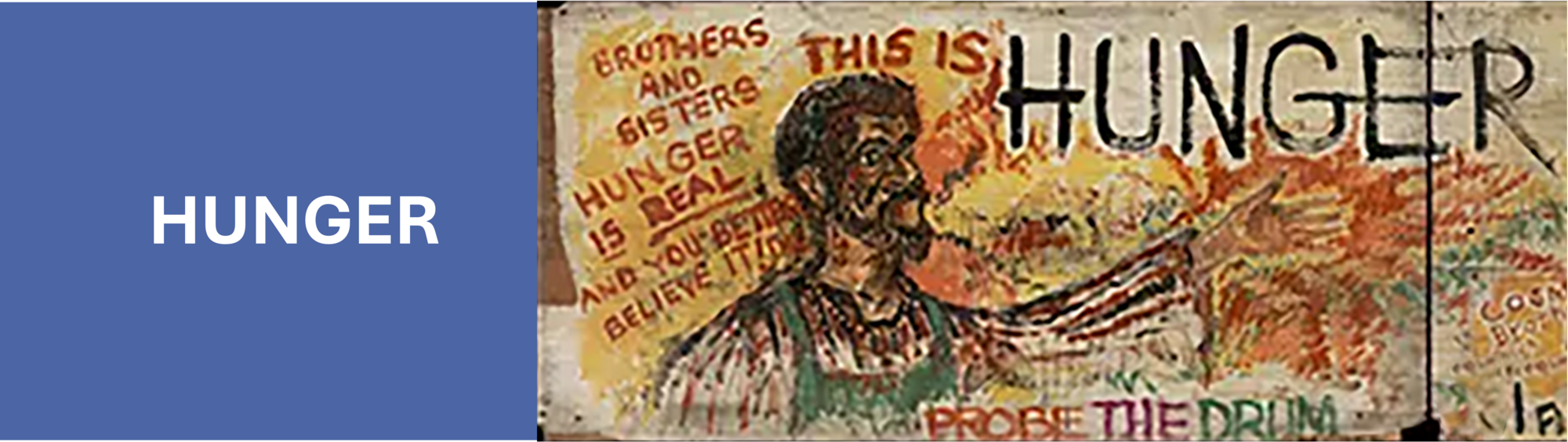
Hunger, Housing, & Poverty
-
-
Top Committee Priorities for 2026
- Feature HOUSING 101, a series of workshops, podcasts, and webinars to educate ourselves about housing issues, e.g., vacate housing.
- Use letter writing and social media platforms to endorse local and relevant housing legislation in Baltimore City and surrounding counties.
- Use letter writing campaigns of support on the federal level to end hunger and poverty at home and abroad.
- Build relationships with our local and state representatives.
- Host a Speakers Bureau at St. Ignatius Catholic Community featuring social justice speakers.
- As a parish located in Baltimore City, identify and directly support key housing, hunger and poverty issues that impact the communities we serve.
- Continue to expand parish support and community relationships.
-
Meetings
2nd Thursday of the Month
at 6PM - Ignatian Hall -
Next Meetings
-
Thursday, November 12, 6:30 PM - 8:00 PMThe Justice & Peace Ministry of Saint Ignatius Catholic Community is dedicated to serving faith and promoting justice.Read More
-
Thursday, December 10, 6:30 PM - 8:00 PMThe Justice & Peace Ministry of Saint Ignatius Catholic Community is dedicated to serving faith and promoting justice.Read More
-
-
-
-
-
-
 Affordable Housing Initiatives: Baltimore vs. Maryland Housing Trusts 2025-26The chart below is a side-by-side visual comparison showing the accomplishments, unit impact, and funding metrics of the Baltimore City and Maryland State housing trust funds over the past year.It summarizes the data we discussed for your website, comparing the Baltimore City Affordable Housing Trust Fund and the Maryland Affordable Housing Trust (MAHT) across six distinct operational areas:
- Primary Oversight: The specific government housing departments running each trust.
- Housing Units Impacted: The total number of affordable units created or preserved (2,154 units locally vs.9,700+ units statewide).
- Recent Funding Allocated: The latest localized funding rounds ($7.5 million vs. $5.36 million).
- Target Demographics: The specific income and vulnerability brackets served (such as 30%–50% Area Median Income).
- Key Strategic Focus: What the money actually funds (like Community Land Trusts vs. statewide capital costs).
- Geographic Scope: The physical jurisdiction boundaries (Baltimore City limits vs. all 24 Maryland counties).

-

Landmark Fair Housing Legislation Signed into Law in Maryland May 26, 2026 After a concerted effort by national civil rights organizations and local fair housing advocates, Governor Wes Moore today signed Fair Chance Housing Act (SB 937) and Fair Housing and Housing Discrimination – Regulations, Intent, and Discriminatory Effect (HB 573) into law. These new laws mark a significant step forward in ensuring that every resident in the state of Maryland has access to affordable and accessible housing in well-resourced neighborhoods of their choice, without discrimination standing in their way.
The Fair Chance Housing Act places limits on how landlords use criminal background checks, ensuring applicants are evaluated on their qualifications as tenants today, such as their ability to reliably pay rent and be a good tenant and neighbor, rather than their past. It is the most progressive statewide fair chance at housing legislation in the country. The Fair Housing and Housing Discrimination – Regulations, Intent, and Discriminatory Effect bill, now signed into law, strengthens the state’s fair housing laws by codifying protections against policies that have unjustified discriminatory effects and by ensuring Maryland takes proactive steps to combat housing discrimination and overcome patterns of housing segregation.Read Complete Article Monday, Dec 15 from 6 pm to 8 pm EST- Baltimore Unity Hall
1505 Eutaw Place
Baltimore, MD 21217
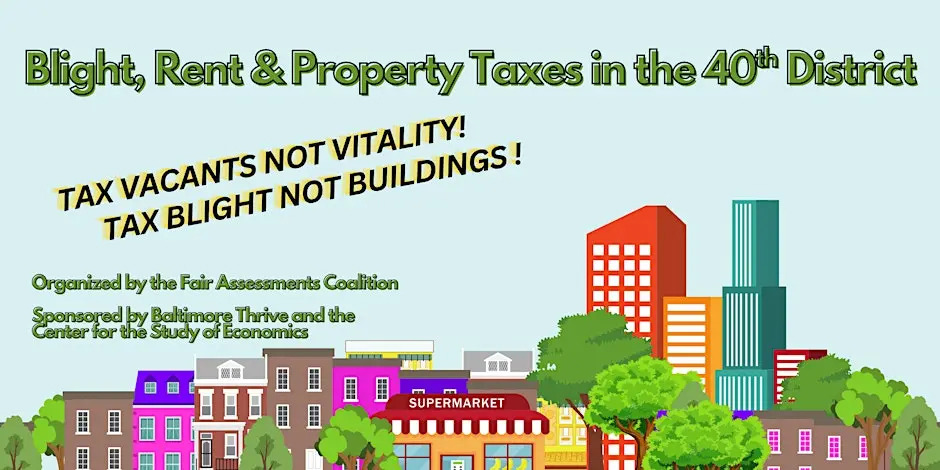 Overview
 -
State Department of Assessments and Taxation (SDAT) Updates.
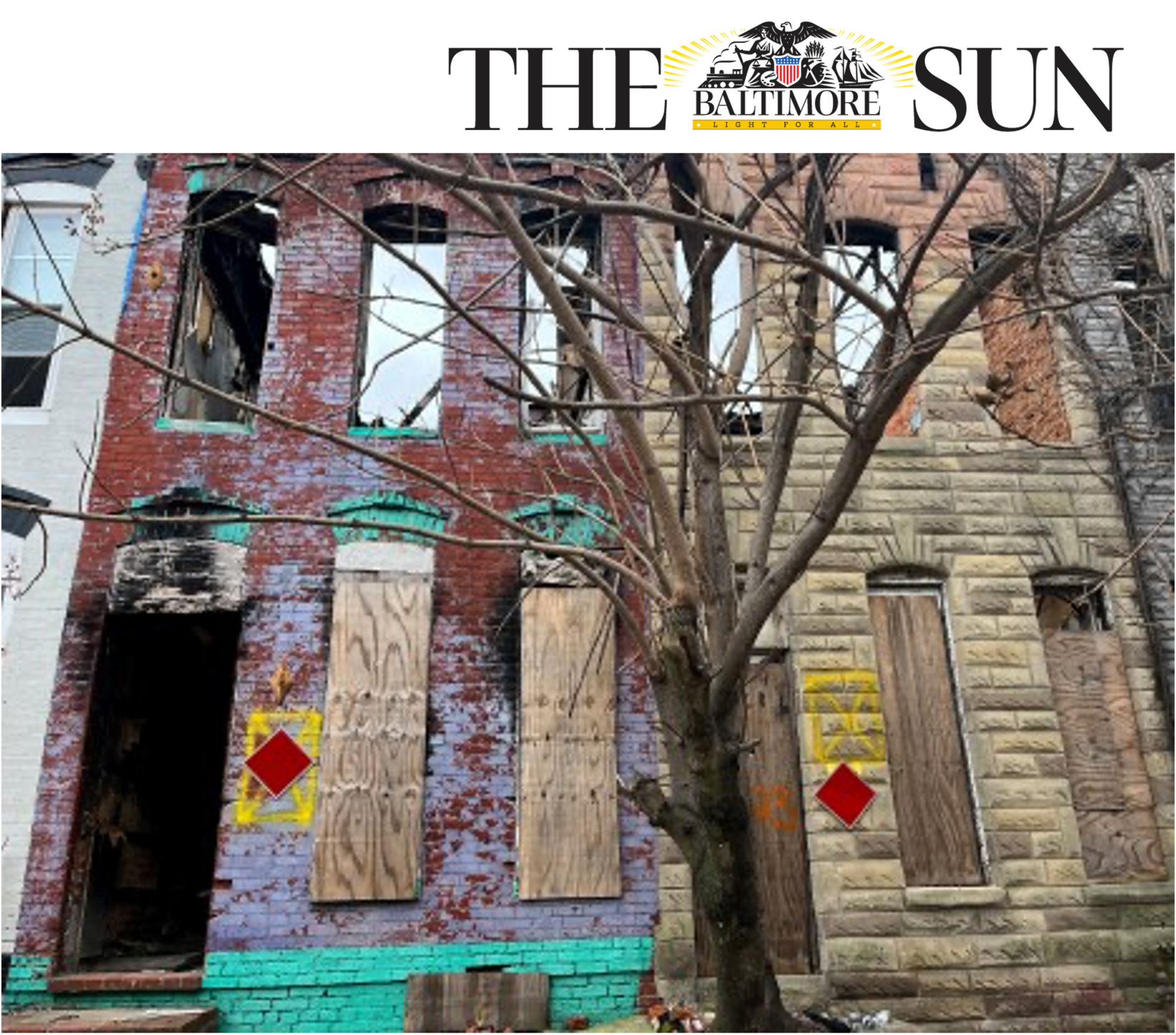 What a new report says about Baltimore’s property tax problem | GUEST COMMENTARY
This month, the Center for Land Economics, an independent research firm, published the results of a months-long investigation into the accuracy of state assessments of vacant property here in Baltimore City. Using state assessment and property transaction data, the report found that flawed assessment methods undervalue the city’s vacantproperties by almost half a billion dollars.
The report connected the poor quality of Maryland Department of Assessments and Taxation (SDAT) assessments to the city’s vacancy crisis by showing how the systemic undervaluation of vacant properties makes them “tax-privileged” assets attractive to speculators. This, they observe, amounts to an effective subsidy for speculators — the costs of which are passed on to residents and businesses who bear the cost of the undervaluation in the form of higher tax rates.
Continue Reading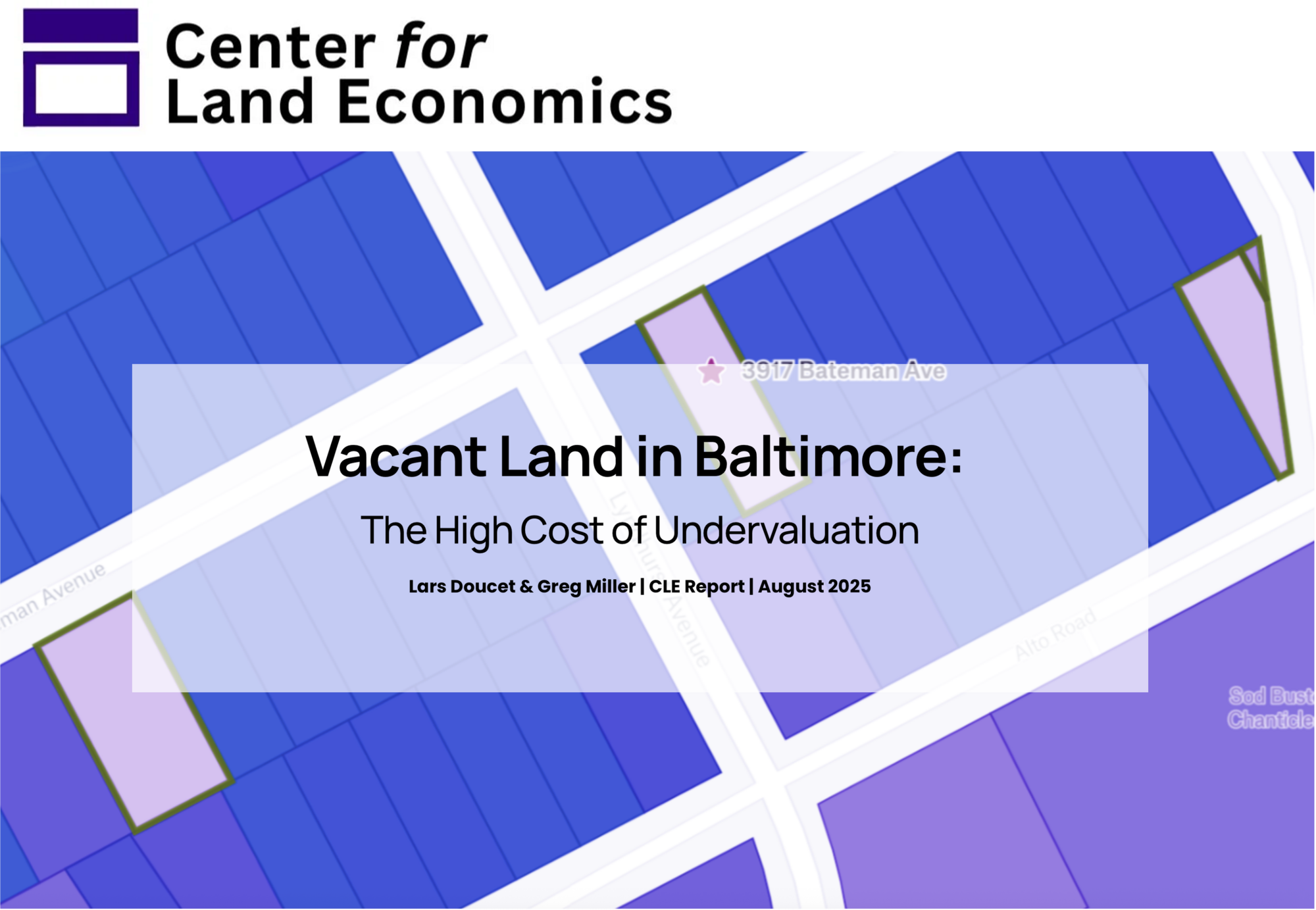
Baltimore is sitting on nearly half a billion dollars of undervalued, vacant land.
Our investigation reveals how flawed state property assessments systematically undervalue empty lots, often assessing them at a fraction of their true market price. This practice creates an unintentional incentive for speculative blight and unfairly shifts the tax burden onto homeowners and active businesses.
Read Full Report
-
-
-

Sixteen groups to receive $50M to transform vacant properties in Baltimore City
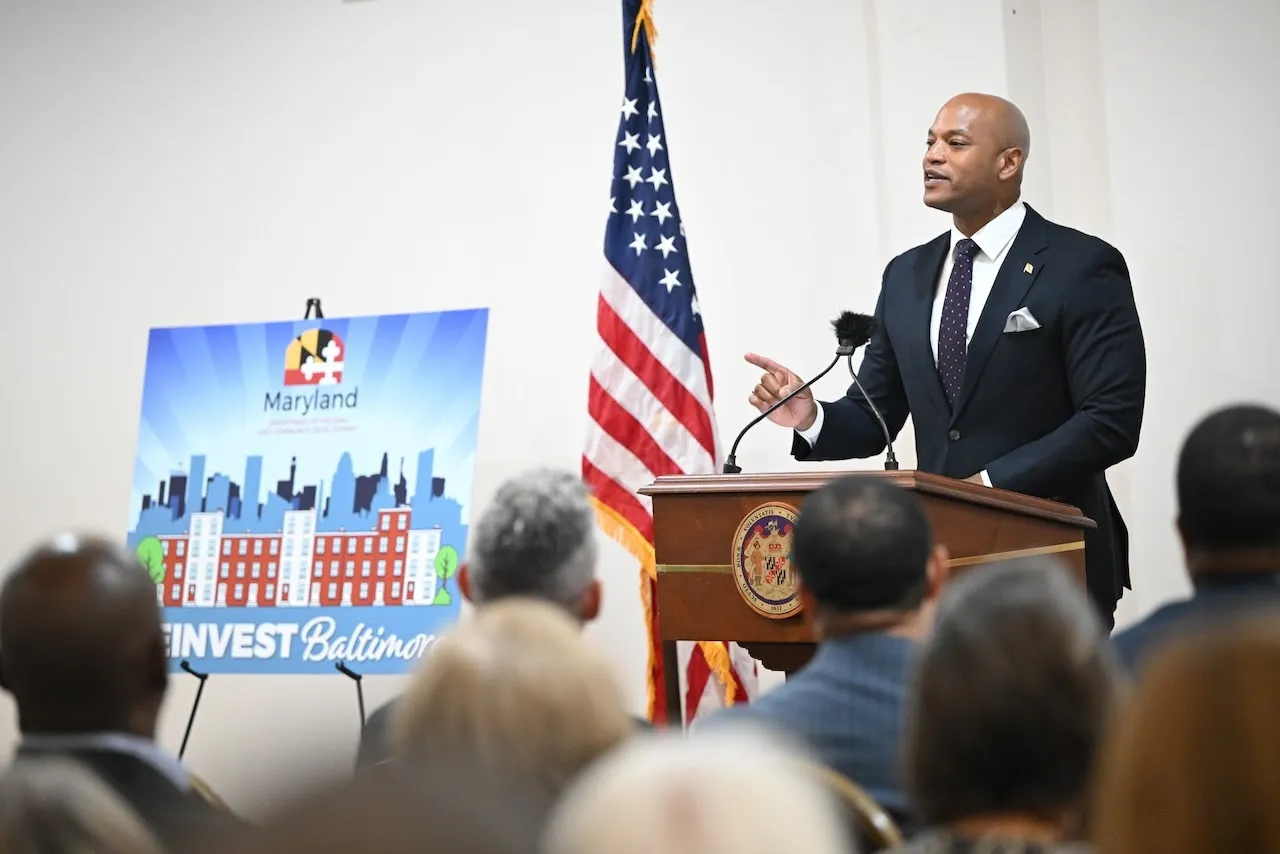 Photo courtesy The Office of Governor Wes Moore.Gov. Wes Moore announced who will receive $50 million in grant awards to help reduce the number of vacant properties in Baltimore City.
These grants are through the Baltimore Vacants Reinvestment Initiative (BVRI), a program that helps redevelop vacant properties.
Awardees include Baltimore Redlining and Blight Elimination CDC, Coppin Heights CDC, Park Heights Rennaisance, South Baltimore Gateway Partnership, and many other groups and community organizations.
Moore also announced a new Baltimore Vacants Reinvestment Initiative Support Fund, which has collected more than $1 million from philanthropists to award funds for technical assistance.Last year, the Moore-Miller administration created Reinvest Baltimore last year to address vacant property issues in Baltimore City.
“For this to be Maryland’s decade, it has to be Baltimore’s time,” Moore said in a statement. “We know that if we want to drive investment and growth in Baltimore City, we need to address its vacant housing crisis. And the future of these properties will be written in coordination with local leaders – because those closest to the problem are closest to the solution. Together, we will build a more vibrant, prosperous, and growing Baltimore for all.”
Continue Reading
-
-
-
 On Sunday, BUILD joined with state and city leaders, the Greater Baltimore Committee, and financial institutions at Greater Harvest Baptist Church in West Baltimore to take another major step in the fight to end the legacy of redlining in Baltimore. A huge thank you to the more than 600 people who attended a packed GHBC.
Led by PNC Bank, financial institutions and the Greater Baltimore Committee committed to lead the work of organizing a private capital fund that would support our work of ending the vacant housing crisis in Baltimore. BUILD announced a public goal to capitalize the fund with at least $100 million.
This fund will help leverage the $1.2 billion in public investment already committed by the city and state to revitalizing historically disinvested neighborhoods. Maryland Housing Secretary Jake Day announced the state's willingness to work with BUILD, GBC, and financial institutions to establish a secure and effective structure for housing these funds.
Mayor Brandon Scott pledged to take concrete action on specific issues on housing-related issues -- permits, stabilization, demolition, and acquisition -- with a public report to BUILD leaders in July.
Leaders also shared updates on our work to fight for a Fair Chance in Housing for people coming home from incarceration and our ongoing work organizing with immigrant families to respond to this current moment.
Together, we can build a more just and equitable Baltimore. Thank you for being part of BUILD!
Here's some press about the action.
Baltimore Banner (if the article is behind a paywall, click here.)
Baltimore Sun (if the article is behind a paywall, click here.)
Fox Baltimore -
Community Housing Hub 
What Baltimore Can Learn From Other Cities that Have Tackled Vacant Properties
From the Baltimore Banner
Baltimore isn’t the only place that has struggled to reduce a glut of vacant properties: several other cities and towns also are dealing with decades of flight to the suburbs, the Great Recession housing crash, and the lingering effects of redlined neighborhoods or other remnants of racist or discriminatory practices.Some states — including Illinois, Michigan, Ohio, Rhode Island and Washington, D.C. — have been able to use a $1.5 billion Obama-era program to prevent foreclosures and address neighborhood blight, but Maryland did not qualify. Baltimore’s vacant house problem is so stubborn and pervasive that no one tool, developer or community association alone can solve it, but those working on the issue say the city should try new ideas, tap community resources and pursue legal options to make progress.
The Baltimore Banner went looking for examples of how other cities have addressed vacant and blighted housing. These are some of their stories.
-
-
-
-
-
Details for Free Grocery Pickup. An Excellent and Needful Resource.


-
-
-
Defining Hunger
The U.S. government does not use the term “hunger” but defines and regularly measures the incidence of two related conditions.
One is “low food security,” or not always being sure of having enough money to pay for food.
The other is “very low food security,” skipping meals or not eating for a whole day or longer because there is not enough money for food.
The term “food insecurity” refers to households in either group. Bread for the World considers food insecurity to be hunger. Americans frequently interpret “hunger” or “food insecurity” to mean that someone does not have enough food.
And, of course, it’s true that not having enough food is hunger. But the two terms also encompass not just the number of calories available to people, but the nutrients they consume.
Since nutritious foods tend to cost more and may be harder to access in low-income neighborhoods, people who live below the poverty line are too often forced to choose cheap foods that may be filling but do not provide the nutrients needed for good health. Their health—especially the health of children—can and does suffer as a result.
Protect Food Aid for Millions Around the World Tell Congress to prioritize international hunger-reducing programs in the Farm Bill.
You can write your legislator by clicking here -
Hunger is about more than food. It’s about people!
Volunteer
- Support of our Loaves and Fishes MinistryAdvocate
- End the pause on U.S. foreign assistance and protect domestic nutrition programs.
- Pledge to advocate for the protection of lifesaving foreign assistance and domestic nutrition programs.Support Loaves and Fishes Ministry - visit our webpage for ways to support our work.The Loaves and Fishes Ministry began in order to provide a nourishing weekend meal to the homeless and poor of Baltimore City and create an opportunity for fellowship for homeless patrons and ministry volunteers, trying to understand and live out the Gospel challenge of Matthew 25.Go to the Loaves & Fishes Ministry PageSupport Local Food PantrySt. Vincent de Paul of Baltimore's Beans and Bread Resource Center400 S. Bond StreetBaltimore, MD 21231Call (410) 732-1892Email [email protected]Read this article and find out how you can help: https://www.cbsnews.com/baltimore/news/baltimore-food-pantry-critically-low-donations-st-vincent-de-paul-beans-bread/ St. Vincent de Paul (SVDP) of Baltimore's Beans and Bread Resource Center is experiencing critically low donations ahead of the colder months.
-
-
-
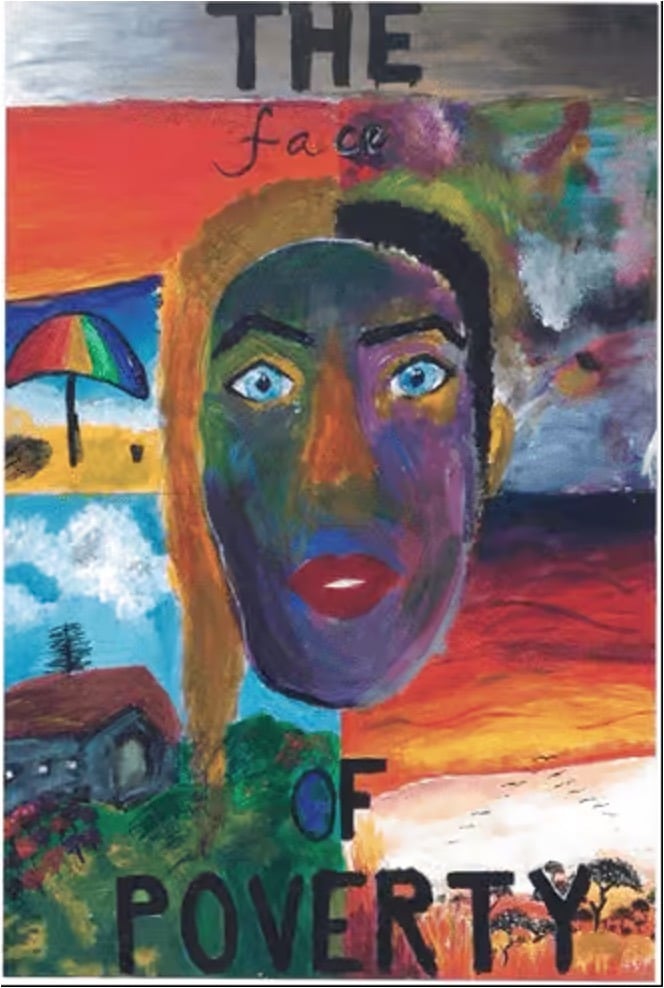
“The Face of Poverty” by student artist Megan Jackson is a national entry of the Catholic Campaign for Human Development (CCHD) Multimedia Youth Contest. This contest allows students in grades 7-12 to learn about poverty in the United States, its root causes, and faith-inspired efforts to address poverty, especially through CCHD. The contest is sponsored by
CCHD and RCL Benziger.
-
-
“The need to resolve the structural causes of poverty cannot be delayed, not only for the pragmatic reason of its urgency for the good order of society, but because society needs to be cured of a sickness which is weakening and frustrating it, and which can only lead to new crises. … Inequality is the root of social ills.”– POPE FRANCIS
-
-
-
-
Baltimore Vacants Reinvestment Council releases 2025 annual report
November 10, 2025
The Baltimore Vacants Reinvestment Council (BVRC) released its fiscal year (FY) 2025 annual report on Oct. 20. Established in October 2024 by Gov. Wes Moore (D) through his Reinvest Baltimore executive order, the council brings together community, government, corporate and philanthropic leaders under the mission of revitalizing 5,000 vacant properties.
The new report lays out how city, state and private partners are aligning $100 million in state funding across FY25 and FY26 to aid coordinated, whole-block redevelopment strategies aimed at building stronger neighborhoods. The $100 million will help fund demolition and renovation of more than 2,000 vacant properties in the city. five years.
Read Article
Maryland Workers Impacted by Recent Federal Actions
On October 1st, Governor Wes Moore announced a series of additional actions to help Marylanders impacted by the federal shutdown. These actions reinforce the Moore-Miller Administration’s commitment to supporting Marylanders. This webpage outlines resources available to impacted federal employees and contractors.
View Video
View Webpage
The false promise of zoning bills being pitched as a path to affordable housing
October 20, 2025
Councilman Ryan Dorsey and Mayor Brandon Scott are instituting a sweeping overhaul of Baltimore zoning rules that will hurt residents of this “city of neighborhoods” [OP-ED]
As community leaders who have grappled with the same stubborn housing problems that plague so many Baltimore neighborhoods – lack of safe affordable housing, unscrupulous real estate speculators, absentee landlords, gentrification – we were intrigued when lawmakers unveiled legislation meant to bring about positive change.
Read Article
Gov. Wes Moore announced who will receive $50 million in grant awards to help reduce the number of vacant properties in Baltimore City.July 8, 2025
These grants are through the Baltimore Vacants Reinvestment Initiative (BVRI), a program that helps redevelop vacant properties.
Awardees include Baltimore Redlining and Blight Elimination CDC, Coppin Heights CDC, Park Heights Rennaisance, South Baltimore Gateway Partnership, and many other groups and community organizations.
Read MoreHunger in Your Neighborhood: How Families Fare with Food Insecurity Across Maryland
May 5, 2025
For a long time, we’ve known that food insecurity has a negative effect on Marylanders. But as we continue to gather more, and take a deeper dive into local data, our research and reports are showing some surprising information about how much where families live affects how much hunger impacts their lives.
Geography plays a role in which of the different root causes (lack of financial resources, transportation or dependent care challenges, etc.) families are forced to overcome.
Our colleagues at the United Way of Central Maryland offer excellent insights into the intersection of geography & hunger, through their A.L.I.C.E. Report.
-
CRS Urges Congress to Prioritize Critical Poverty-Reducing Humanitarian Aid in FY26 Appropriations
April 2, 2025
WASHINGTON, D.C.– Bill O'Keefe, Executive Vice President of Catholic Relief Services (CRS), along with other organizations, is urgently calling on Congress to protect and prioritize poverty-reducing international humanitarian and development assistance in FY26 Appropriations.
In a written testimony submitted to the House Subcommittee on National Security and the Department of State, O'Keefe urged Congress to maintain funding for critical programs that address global health, development, disaster relief and migration challenges. The total funding request for these programs amounts to about $30 billion.
Read Article
-
-
Community Partners
-
-
-
-
-
Contact Us
-
Candra Healycandrahealyst-ignatius.netHunger, Housing & Poverty Committee Chair
-
-